1801, early in the story
Lockwood visits Wuthering Heights
Mr. Lockwood, a new tenant at Thrushcross Grange, calls on his landlord, Mr. Heathcliff, at Wuthering Heights. He is met with a surly reception, a pack of aggressive dogs, and a glimpse of the household's grim atmosphere. This visit establishes the inhospitable nature of the Heights and introduces the key characters of Heathcliff, Joseph, and the mysterious young woman Lockwood later learns is Catherine Heathcliff.
1801, the day after his first visit
Lockwood's second visit and snowstorm
Lockwood returns to Wuthering Heights during a snowstorm and is reluctantly allowed inside. He meets the household's inhabitants: the sullen young woman he assumes is Mrs. Heathcliff, the rough Hareton Earnshaw, and the cantankerous Joseph. A tense, silent tea reveals the deep animosities within the family, and Lockwood is forced to stay the night due to the worsening weather.
1801, the night of his second visit
Lockwood's nightmare in the oak-panelled bed
Lockwood is given a chamber with an oak-panelled bed, where he discovers the names 'Catherine Earnshaw', 'Catherine Heathcliff', and 'Catherine Linton' scratched into the paint. He reads Catherine Earnshaw's diary, which details her childhood with Heathcliff and the tyranny of her brother Hindley. That night, he has a nightmare in which the ghost of Catherine Linton begs to be let in through the window, causing him to scream and alert Heathcliff.
1801, immediately after Lockwood's nightmare
Heathcliff's anguished reaction to the ghost
Heathcliff, roused by Lockwood's scream, enters the room and is deeply disturbed. After Lockwood leaves, Heathcliff opens the window and desperately calls out for Catherine's ghost to come in, revealing his enduring, obsessive grief for the lost Catherine Earnshaw. Lockwood witnesses this display of raw emotion, which deepens the mystery of Heathcliff's past.
1801, the morning after the snowstorm
Lockwood returns to Thrushcross Grange
Lockwood escapes Wuthering Heights at dawn, guided partway by Heathcliff. He arrives back at Thrushcross Grange exhausted and ill, having lost his way in the deep snow. His encounter with the strange household and his disturbing night have left him both curious and shaken, prompting him to ask his housekeeper, Nelly Dean, for the history of Heathcliff and his family.
1801, shortly after Lockwood's return
Nelly Dean begins her story
Lockwood, bedridden with a cold, persuades Nelly Dean to tell him the story of the inhabitants of Wuthering Heights. Nelly, who has lived in the area for eighteen years, agrees and begins her narrative, starting with the arrival of a mysterious orphan child at Wuthering Heights many years ago.
1771, late summer
Mr. Earnshaw brings Heathcliff home
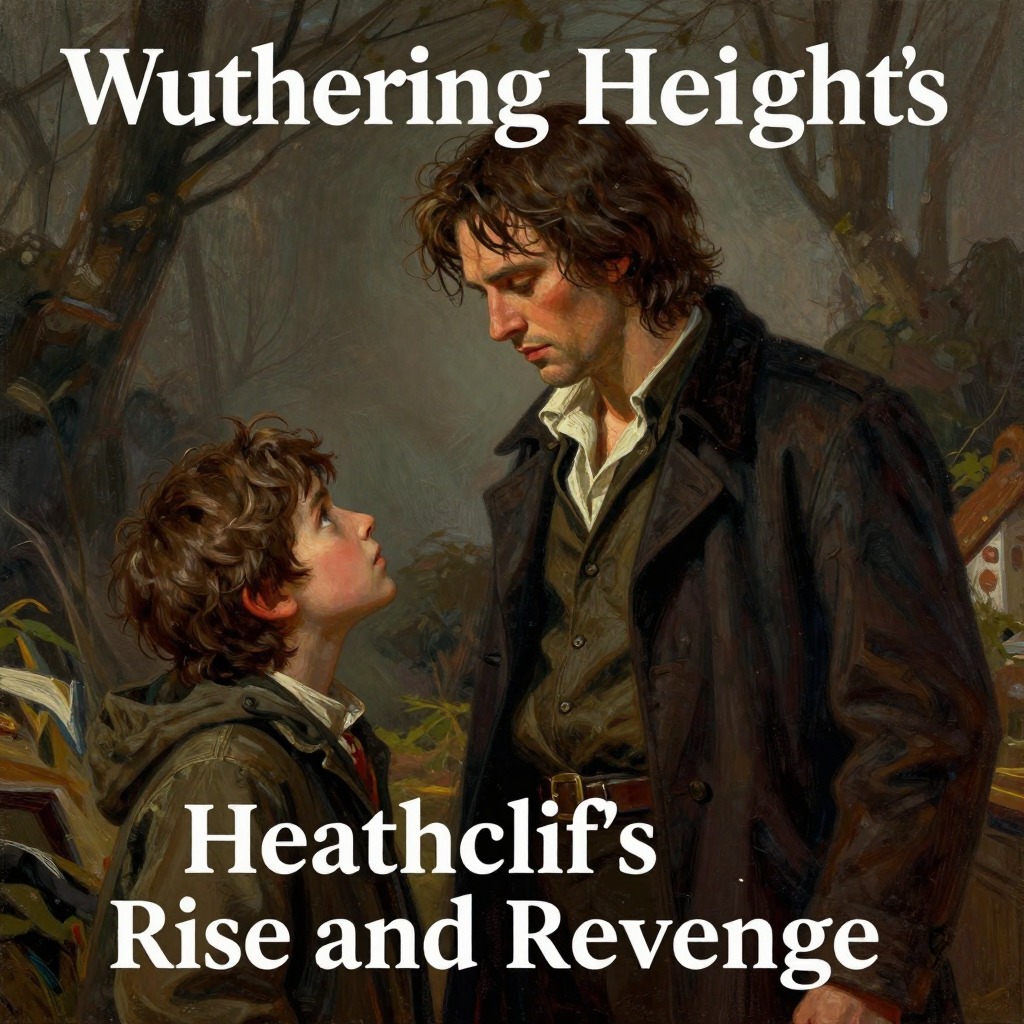
Mr. Earnshaw returns from a trip to Liverpool with a dirty, ragged, dark-haired orphan he found starving in the streets. He presents the child, who is christened Heathcliff, to his family. Mrs. Earnshaw is furious, Hindley is resentful, and young Catherine is initially hostile, but the child soon becomes Mr. Earnshaw's favorite, causing deep divisions in the household.
1771-1773, after Heathcliff's arrival
Hindley's persecution of Heathcliff
Hindley Earnshaw, feeling displaced by his father's affection for Heathcliff, begins to cruelly persecute the boy. He beats him, calls him a vagabond, and tries to separate him from Catherine. Heathcliff endures the abuse with a sullen, patient stoicism that only enrages Hindley further and deepens Mr. Earnshaw's attachment to him.
1771-1773, during their early years
Catherine and Heathcliff's childhood bond
Despite Hindley's cruelty, Catherine and Heathcliff become inseparable companions. They spend their days running wild on the moors, rebelling against the strictures of Joseph's religious teachings and Hindley's authority. Their bond is one of absolute sympathy and shared defiance, forming the foundation of their lifelong connection.
1773, October
Mr. Earnshaw's death
Mr. Earnshaw dies peacefully in his chair by the fire, with Catherine and Heathcliff at his feet. His death marks a turning point, as Hindley, now master of Wuthering Heights, returns for the funeral with a wife, Frances. Hindley immediately begins to degrade Heathcliff, reducing him to the status of a servant and forbidding him from associating with Catherine.
1773, shortly after Mr. Earnshaw's death
Hindley's return with Frances
Hindley returns to Wuthering Heights for his father's funeral, bringing his new wife, Frances. He immediately asserts his authority, banishing Joseph and Nelly to the back kitchen and treating Heathcliff with open contempt. Frances, initially kind to Catherine, soon tires of her and, influenced by Hindley, encourages his hatred of Heathcliff.
1773, a Sunday evening
Catherine bitten by Skulker
Catherine and Heathcliff run to Thrushcross Grange to spy on the Linton children, Edgar and Isabella. They are discovered, and as they flee, the Lintons' bulldog, Skulker, bites Catherine's ankle. She is taken into the Grange, where the Lintons care for her, while Heathcliff is sent away as a 'wicked boy.' This event introduces Catherine to the civilized world of the Lintons and begins her separation from Heathcliff.
1773, five weeks after the dog bite
Catherine's stay at Thrushcross Grange
Catherine remains at Thrushcross Grange for five weeks to recover from her ankle injury. During this time, she is transformed by the Lintons' influence: she learns their manners, adopts their dress, and becomes a 'very dignified person.' When she returns to Wuthering Heights, she is a lady, and the contrast between her new refinement and Heathcliff's wildness creates a painful rift between them.
1773, Christmas Eve
Heathcliff's humiliation at Catherine's return
Catherine returns to Wuthering Heights, beautifully dressed and refined. Heathcliff, dirty and neglected, hides in shame. When Catherine tries to embrace him, she laughs at his appearance, deeply wounding his pride. He vows to get revenge on Hindley, who has degraded him, and the incident solidifies his determination to rise above his circumstances.
1773, Christmas Day
Heathcliff throws applesauce at Edgar
During a Christmas visit from the Lintons, Edgar Linton makes a remark about Heathcliff's long hair. Enraged, Heathcliff throws a tureen of hot applesauce at Edgar's face. Hindley punishes him by locking him in the garret, but Catherine secretly visits him, and they are reconciled. The incident deepens the enmity between Heathcliff and the Lintons.
1778, June
Frances's death after childbirth
Frances Earnshaw dies shortly after giving birth to a son, Hareton. Her death devastates Hindley, who descends into a life of reckless dissipation, drinking and gambling. He becomes a tyrannical and abusive master, neglecting his son and treating Heathcliff with even greater cruelty. The household at Wuthering Heights falls into a state of chaos and degradation.
1778, shortly after Frances's death
Catherine's engagement to Edgar
Edgar Linton proposes to Catherine, and she accepts. In a confession to Nelly, Catherine reveals her love for Heathcliff but acknowledges that marrying him would degrade her. She believes that by marrying Edgar, she can help Heathcliff rise in the world. Heathcliff overhears her say it would 'degrade' her to marry him and, heartbroken, leaves Wuthering Heights before she can finish her explanation.
1778, the night of the thunderstorm
Heathcliff's departure
After overhearing Catherine's conversation with Nelly, Heathcliff runs away into the night during a violent thunderstorm. Catherine, distraught, waits for him all night in the rain, falling ill with a fever. Heathcliff is not seen or heard from for three years, and Catherine's illness nearly kills her.
1778, after Heathcliff's departure
Catherine's brain fever
Catherine falls dangerously ill with a brain fever after Heathcliff's disappearance. She is nursed back to health by the Lintons, but her recovery is slow. The illness leaves her changed: she becomes more haughty and passionate. Her parents-in-law, Mr. and Mrs. Linton, both catch the fever and die, leaving Edgar as the master of Thrushcross Grange.
1780, three years after Heathcliff's departure
Catherine's marriage to Edgar
Catherine marries Edgar Linton and moves to Thrushcross Grange. Nelly Dean accompanies her, leaving Hareton behind at Wuthering Heights. The marriage appears happy at first, with Edgar doting on Catherine, but her wild spirit is subdued by the constraints of her new life. The union sets the stage for the conflict that will erupt upon Heathcliff's return.
1783, September
Heathcliff's return
Heathcliff returns to the neighborhood, now a wealthy and educated man. He visits Thrushcross Grange and is reunited with Catherine, who is overjoyed. Edgar is wary and jealous, but Catherine insists on maintaining her friendship with Heathcliff. Heathcliff takes up residence at Wuthering Heights, having ingratiated himself with the now-dissipated Hindley.
1783, shortly after Heathcliff's return
Isabella's infatuation with Heathcliff
Isabella Linton, Edgar's sister, becomes infatuated with Heathcliff, despite Catherine's warnings about his cruel nature. Heathcliff, seeing an opportunity for revenge against Edgar, encourages her attachment. Catherine, realizing Heathcliff's intentions, tries to warn Isabella, but the young woman is blind to his true character.
1783, after a quarrel
Edgar banishes Heathcliff
A violent quarrel erupts between Heathcliff and Edgar, during which Edgar strikes Heathcliff. Catherine, enraged, locks herself in her room and refuses to eat. Edgar, asserting his authority, banishes Heathcliff from Thrushcross Grange. This confrontation marks the beginning of the end of Catherine's and Edgar's marital happiness.
1783, after the quarrel with Edgar
Catherine's mad fit and illness
Catherine, distraught over the conflict between Edgar and Heathcliff, locks herself in her room and begins a hunger strike. She becomes delirious, hallucinating about her childhood at Wuthering Heights. Her physical and mental state deteriorates rapidly, and she is diagnosed with a brain fever, which threatens her life.
1783, during Catherine's illness
Isabella's elopement with Heathcliff
While Catherine is ill, Isabella Linton elopes with Heathcliff. They marry and he takes her to Wuthering Heights, where she is subjected to a life of misery and abuse. Edgar, upon learning of the elopement, disowns his sister, declaring her dead to him. The elopement is a key part of Heathcliff's revenge against the Linton family.
1783, shortly before her death
Catherine's final meeting with Heathcliff
Nelly arranges a secret meeting between Catherine and Heathcliff. They have a passionate and agonizing reunion, blaming each other for her impending death. Heathcliff confesses that he cannot live without her, and Catherine declares that she is Heathcliff. The meeting is both a declaration of their undying love and a final, devastating farewell.
1783, the night after the meeting
Catherine's death
Catherine gives birth to a daughter, also named Catherine, and dies two hours later, never regaining consciousness. Her death devastates Edgar and leaves Heathcliff in a state of wild, inconsolable grief. He begs her ghost to haunt him, a plea that will define the rest of his life.
1783, the night after her burial
Heathcliff's vigil at Catherine's grave
Heathcliff spends the night at Catherine's grave, digging up the earth in a desperate attempt to be with her. He is stopped by a supernatural feeling that her spirit is with him, not in the grave, but on the earth. This experience gives him a strange, tortured peace and a conviction that her ghost will haunt him.
1783, shortly after Catherine's death
Isabella's escape from Wuthering Heights
Isabella, unable to endure Heathcliff's cruelty any longer, escapes from Wuthering Heights during a violent confrontation between Heathcliff and Hindley. She flees to Thrushcross Grange, bruised and bleeding, and then leaves the area permanently, settling in the south of England. She later gives birth to a son, Linton Heathcliff.
1784, six months after Catherine's death
Hindley's death
Hindley Earnshaw dies, leaving Wuthering Heights heavily mortgaged to Heathcliff. Heathcliff becomes the master of the Heights and takes custody of Hareton, whom he raises as an uneducated, brutalized servant. This completes Heathcliff's first stage of revenge: he has usurped the Earnshaw family's property and degraded their heir.
1797, twelve years after Catherine's death
Linton arrives at Thrushcross Grange
Isabella Linton dies, and her son, Linton Heathcliff, is sent to live with his uncle, Edgar Linton, at Thrushcross Grange. Linton is a pale, sickly, and peevish boy. His cousin, young Catherine (Cathy), is delighted to have a playmate, but her joy is short-lived.
1797, the day after his arrival
Linton taken to Wuthering Heights
Heathcliff demands that his son, Linton, be sent to live with him at Wuthering Heights. Edgar, unable to refuse, reluctantly agrees. Linton is taken to the Heights, where he is subjected to his father's contempt and the rough company of Hareton and Joseph. The separation from Cathy is a source of great sorrow for both children.
1800, when Cathy is sixteen
Cathy and Linton's secret correspondence
Cathy, now a young woman, accidentally meets Linton on the moors and begins a secret correspondence with him. She sends him books and letters, and he responds with love letters that are increasingly manipulative, influenced by his father. Nelly discovers the letters and forces Cathy to burn them, but the emotional connection has been made.
1800-1801, winter
Edgar's illness and decline
Edgar Linton's health begins to fail after a bad cold settles on his lungs. He becomes increasingly weak and confined to his room. Cathy, devoted to her father, spends most of her time nursing him, but his decline is steady. His impending death makes him anxious about Cathy's future.
1801, summer
Heathcliff's scheme to trap Cathy
Heathcliff, knowing Edgar is dying, devises a plan to force Cathy to marry Linton. He uses Linton's failing health as a lure, convincing Cathy to visit the Heights. When she and Nelly arrive, Heathcliff locks them in the house and refuses to let them leave until Cathy agrees to marry Linton.
1801, the morning after her imprisonment
Cathy's forced marriage to Linton
Cathy is forced to marry Linton Heathcliff in a mock ceremony at Wuthering Heights. She is then imprisoned in the house for five days, while Nelly is locked in a separate room. The marriage is a legal trap designed to ensure that Heathcliff inherits Thrushcross Grange upon Edgar's and Linton's deaths.
1801, five days after her imprisonment
Cathy's escape from Wuthering Heights
Cathy manages to escape from Wuthering Heights with the help of a terrified Linton, who gives her the key. She returns to Thrushcross Grange just in time to see her father alive. Edgar, overjoyed to see her, dies peacefully in her arms, believing she is safe.
1801, the day of Cathy's return
Edgar Linton's death
Edgar Linton dies, content in the belief that his daughter is safe. His death leaves Cathy at the mercy of Heathcliff, who immediately asserts his authority. The lawyer, Green, is in Heathcliff's pay, and Edgar's will is altered to leave everything to Linton, effectively giving Heathcliff control of Thrushcross Grange.
1801, after Edgar's death
Cathy's life as a widow at Wuthering Heights
Cathy is taken to Wuthering Heights as a widow after Linton's death. She is treated as a servant by Heathcliff and is isolated and miserable. She has no money and no friends, and her only companions are the brutish Hareton and the hostile Joseph. Her spirit is nearly broken.
1801, shortly after the marriage
Linton Heathcliff's death
Linton Heathcliff dies, leaving Cathy a widow. His death is a relief to her, as it ends her forced marriage, but it also leaves her completely dependent on Heathcliff. With Linton's death, Heathcliff becomes the master of Thrushcross Grange, completing his revenge on both the Earnshaw and Linton families.
1801-1802, after Linton's death
Hareton and Cathy's reconciliation
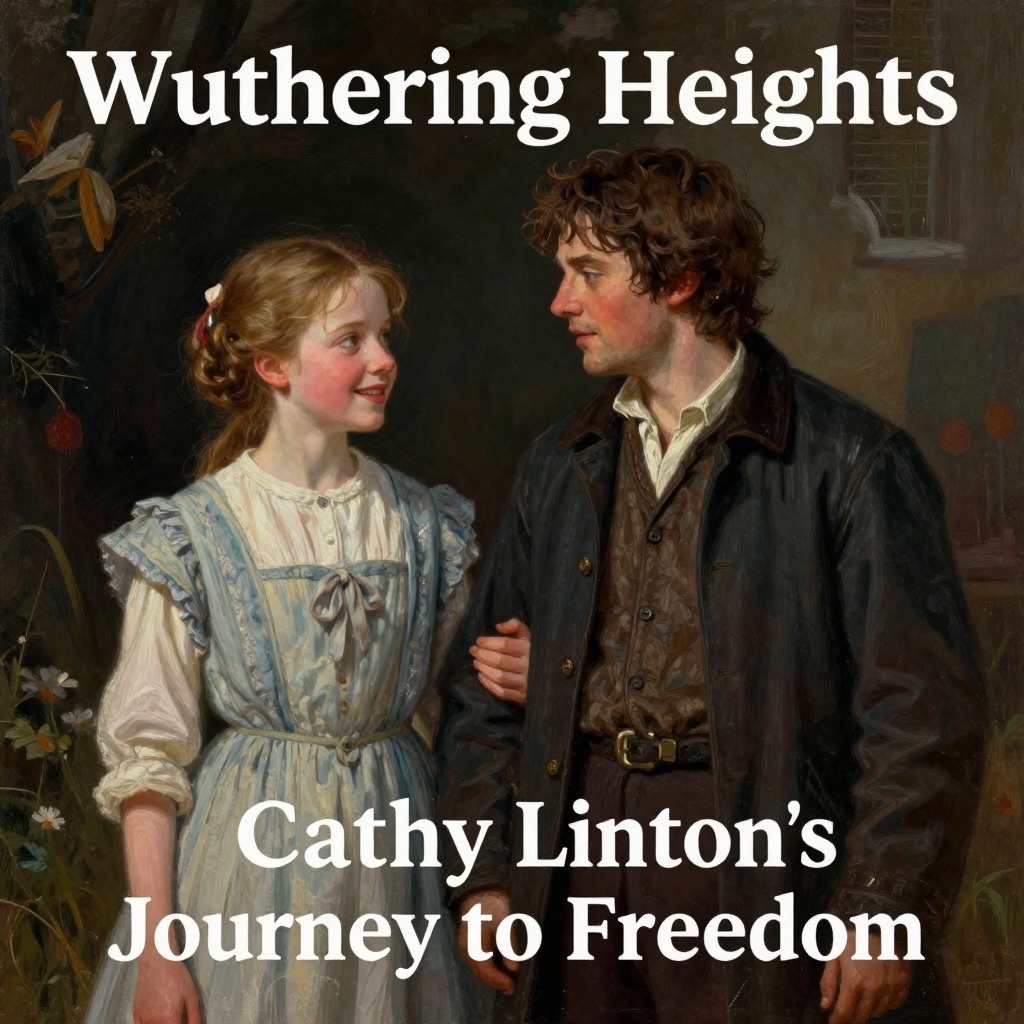
Over time, Cathy and Hareton begin to overcome their mutual hostility. Cathy, seeing Hareton's desire to learn, starts to teach him to read. Their relationship slowly blossoms into friendship and then love, as they find common ground in their shared suffering and their growing affection for each other.
1802, spring
Heathcliff's strange change
Heathcliff undergoes a profound internal change. He loses interest in his revenge and in the world around him. He becomes obsessed with the memory of Catherine, seeing her face in everything. He stops eating and sleeping, and his behavior becomes increasingly erratic, as he feels her presence drawing near.
1802, April
Heathcliff's death
Heathcliff dies in his sleep in the oak-panelled bed, a look of wild joy on his face. He has starved himself for days, driven by his desire to join Catherine. His death is mysterious and unsettling, and the local people believe his ghost walks the moors with Catherine's. He is buried beside her, as he always wished.
1802, September
Lockwood's final visit to the Heights
Lockwood returns to the area a year later and visits Wuthering Heights. He finds Hareton and Cathy happily in love, planning their wedding. Nelly Dean is now living at the Heights. Lockwood learns of Heathcliff's death and visits the graves of Catherine, Edgar, and Heathcliff, reflecting on the peace that has finally come to the troubled families.